Varieties and clones adapted to high density production system

Olint - Varieties and clones adapted to high density production system

The super high intensive olive grove is a crop technology that Agromillora has mastered in cooperation with many of its clients, which enables a very notable increase in profitability in comparison to traditional olive groves.

When the first super intensive olive groves were planted at the beginning of the 90's, there were many unknowns about the new crop model: the duration of plantations, ideal frames, suitable varieties, pruning, fertilization, irrigation, etc. The experience acquired over more than 15 years with the different plantations has made it possible to improve the initial approaches and dissipate many of the doubts the system raised.

The keys to the success of the super high density system reside in: 100% mechanized harvesting with combines; the quick entry into production in the 3rd year, with high output that has been sustained over time; and the high quality of the oil obtained, 100% extra virgin.


  • Mechanized Harvest

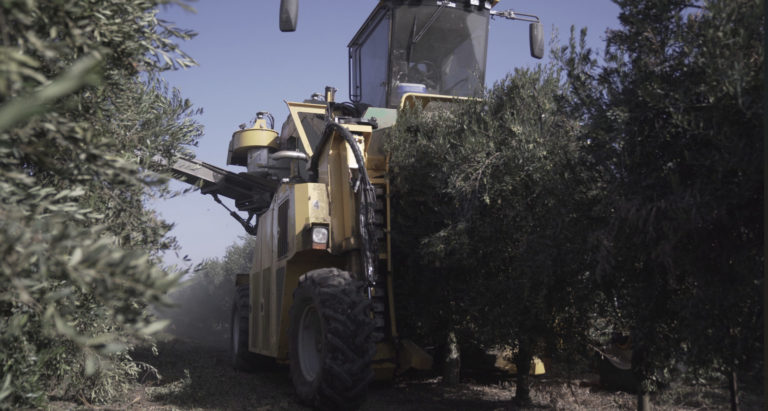
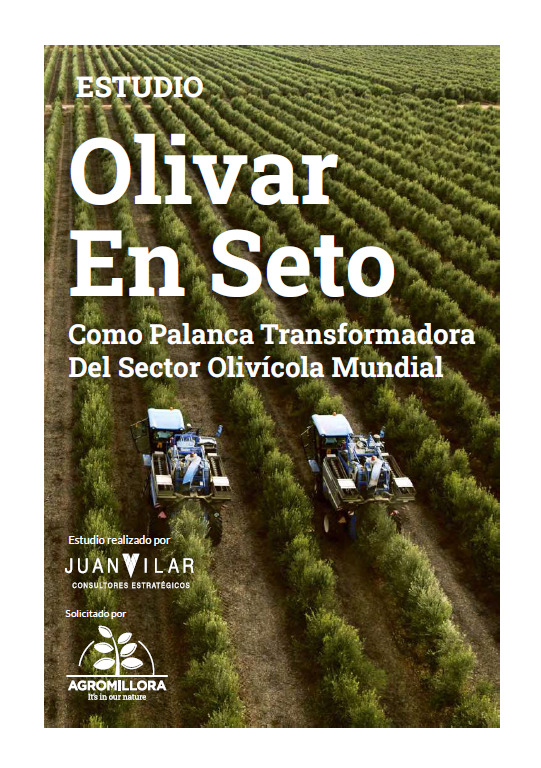
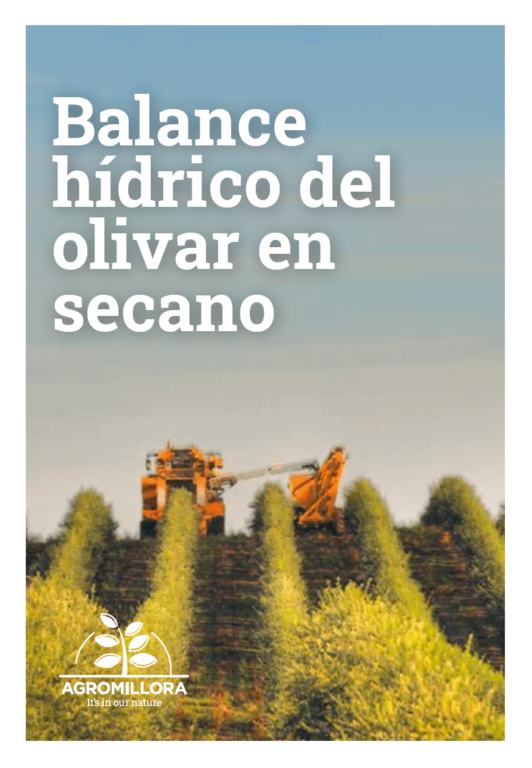
The same over the row harvesters machines used in grape harvests are suitable for olive harvesting, and these can be available throughout the olive harvesting period. The machines do not need modifications and they harvest up to 98% of the fruit all while causing minimal damage to the fruit and trees. Output can reach 2 hours/ha and harvesting costs range from between €0.03-0.06/Kg. This factor enables breaking the initial image of a system exclusively owned and used on large fields or by large investors and has made it so that super intensive cultivation is one more alternative to be considered by traditional olive growers. The super high density system requires fields with slopes that are no higher than 20% so the combine can move.


  • Varieties

The choice of the variety is one of the fundamental aspects of obtaining a good result. There are currently three low-vigor varieties which represent the base of these plantations: Agromillora selection ‘Arbequina’, ‘Arbosana’ i-43 and ‘Koroneiki’ i-38. The number of varieties adapted to the super intensive system is still small, but there are plans for the next few years to incorporate new genetic materials from the Agromillora R+D department improvement program and from the collaboration programs with the University of Cordoba and other institutions.


  • Genetic and health quality of the plan material

For the production of Olint plants, plant material is used from our mother plant fields that were begun from our own initial material which is genetically and health controlled. The availability of greenhouse facilities so that it can be maintained in adequate conditions, the periodic pest and disease controls that are conducted and the traceability system that is applied throughout the production process guarantee the quality of the Olint plants.


  • Mechanized planting

It is possible to plant using single or double-line machinery with laser alignment where a pre-emergence herbicide treatment is applied when planting. The plantation output for a team of 5 people is 7000-9000 plants/day.


  • Mechanized pruning

The super high density system allows for a high level of pruning mechanization, thus contributing to significantly reducing operating costs. In the summer, on an annual basis, topping (cutting the top of the tree) is undertaken at a height of 2.5 m and the lower leaves are cut to keep the lower branches below a height of 60 cm. These two types of pruning.


  • Plantation density

Planting frames are mainly chosen based on the vigor of the varieties, the fertility of the soil and the irrigation scheme. A distance between plants within the lines of 1.35 to 1.5 m, a separation between rows of 3.5 to 4 m, and a limit on the height of the olive tree at 2.5 m makes it possible to form a continuous plant hedge, which receives the perfect amount of light and is capable of sustained productions over the years.


  • Formation in a central axis

One of the characteristics of the super high density system is the formation of the tree in a central axis, which is achieved through proper pruning and staking for the first 3 years. As the plant grows, it is tied to a stake every 20 cm. and the branches in the lower third are eliminated up to a maximum height of 60 cm. without branches. A 2 m stake is recommended for a good tie up to 2.5 m; once this height has been reached, summer topping is completed to maintain it.


  • Production

Entry into production is very rapid as a production of 3-4 Tn/ha is obtained as early as the third year. The results obtained over these years of experience in the various olive-growing zones show sustained production rates of between 8-12 Tn/ha. On plantations in warm areas with appropriate crop management, productions of up to 16 Tn/ha have been obtained.


  • Profitability

The super intensive system has significantly reduced the need for labor not only for the harvest, which in the traditional system amounts to 80% of the total costs, but also in other mechanizable operations such as pruning or even planting. In short, a very notable increase in profitability and lower dependence on the availability of labor, which is more and more scarce in every country, is achieved.


  • Harvest quality

The use of picking machines allows for a quick harvest at the optimal ripening time; the olives do not touch the ground, nor are they damaged and they are immediately taken to processing plants. All of these factors lead to a high quality oil (100% extra virgin) which preserves the characteristic aromas of each variety.

Today, 14 years after the first commercial plantation undertaken by AGROMILLORA in 1994, more than 80,000 hectares all over the world are home to this kind of plantation. This number is quite significant when considering the brief period time that has passed since it was first implemented. More than 50% of the surface area planted using the super high density system is found in Spain; it is followed by Portugal, Chile, the USA, Tunisia, Morocco, France, Italy, Australia (surface area data in Olint magazine num. 12). The acceptance of the super high densitive system by the international olive oil community is reflected by the new lines of study opened by universities and research centers, the important movement generated on the market by the incorporation of new production countries (Chile, the USA, Australia), the constitution of macro projects, and above all, the large number of small projects begun in the major olive oil regions of the world.